What is uncontrolled cell growth and what does it lead to?
The primal abnormality resulting in the development of cancer is the continual unregulated proliferation of cancer cells. Rather than responding appropriately to the signals that control normal cell behavior, cancer cells grow and divide in an uncontrolled manner, invading normal tissues and organs and eventually spreading throughout the body. The generalized loss of growth control exhibited by cancer cells is the net result of accumulated abnormalities in multiple cell regulatory systems and is reflected in several aspects of cell beliefs that distinguish cancer cells from their normal counterparts.
Types of Cancer
Cancer tin result from abnormal proliferation of any of the different kinds of cells in the body, so there are more a hundred distinct types of cancer, which tin can vary essentially in their behavior and response to treatment. The about important upshot in cancer pathology is the stardom between benign and malignant tumors (Effigy 15.1). A tumor is any aberrant proliferation of cells, which may exist either benign or malignant. A beneficial tumor, such as a mutual skin wart, remains confined to its original location, neither invading surrounding normal tissue nor spreading to afar body sites. A malignant tumor, however, is capable of both invading surrounding normal tissue and spreading throughout the body via the circulatory or lymphatic systems (metastasis). Merely cancerous tumors are properly referred to as cancers, and it is their power to invade and metastasize that makes cancer then dangerous. Whereas beneficial tumors tin can usually be removed surgically, the spread of malignant tumors to distant torso sites often makes them resistant to such localized treatment.

Figure 15.1
A malignant tumor of the uterus. Micrographs of normal uterus (A) and a section of a uterine sarcoma (B). Note that the cancer cells (darkly stained) have invaded the surrounding normal tissue. (Cecil Fox/Molecular Histology, Inc.)
Both benign and malignant tumors are classified co-ordinate to the type of prison cell from which they arise. Most cancers fall into one of three master groups: carcinomas, sarcomas, and leukemias or lymphomas. Carcinomas, which include approximately 90% of homo cancers, are malignancies of epithelial cells. Sarcomas, which are rare in humans, are solid tumors of connective tissues, such as musculus, bone, cartilage, and gristly tissue. Leukemias and lymphomas, which account for approximately 8% of human malignancies, ascend from the blood-forming cells and from cells of the allowed arrangement, respectively. Tumors are further classified according to tissue of origin (east.1000., lung or breast carcinomas) and the type of cell involved. For case, fibrosarcomas arise from fibroblasts, and erythroid leukemias from precursors of erythrocytes (red blood cells).
Although there are many kinds of cancer, only a few occur oftentimes (Table 15.1). More a one thousand thousand cases of cancer are diagnosed annually in the United States, and more than than 500,000 Americans die of cancer each year. Cancers of 10 dissimilar body sites account for more than 75% of this full cancer incidence. The 4 nigh common cancers, bookkeeping for more than than half of all cancer cases, are those of the breast, prostate, lung, and colon/rectum. Lung cancer, by far the well-nigh lethal, is responsible for nearly 30% of all cancer deaths.
Table 15.1
X Most Frequent Cancers in the Usa.
The Development of Cancer
One of the primal features of cancer is tumor clonality, the evolution of tumors from single cells that begin to proliferate abnormally. The unmarried-cell origin of many tumors has been demonstrated past analysis of Ten chromosome inactivation (Effigy 15.ii). As discussed in Affiliate viii, one member of the X chromosome pair is inactivated by being converted to heterochromatin in female cells. X inactivation occurs randomly during embryonic development, so one X chromosome is inactivated in some cells, while the other 10 chromosome is inactivated in other cells. Thus, if a female is heterozygous for an X chromosome gene, different alleles volition be expressed in different cells. Normal tissues are composed of mixtures of cells with different inactive 10 chromosomes, so expression of both alleles is detected in normal tissues of heterozygous females. In contrast, tumor tissues generally express only one allele of a heterozygous X chromosome gene. The implication is that all of the cells constituting such a tumor were derived from a single cell of origin, in which the design of X inactivation was fixed before the tumor began to develop.
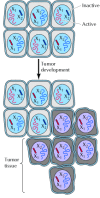
Figure 15.ii
Tumor clonality. Normal tissue is a mosaic of cells in which dissimilar 10 chromosomes (X1 and 102) accept been inactivated. Tumors develop from a single initially altered prison cell, so each tumor prison cell displays the same pattern of X inactivation (Xone inactive, X (more than...)
The clonal origin of tumors does non, however, imply that the original progenitor cell that gives rise to a tumor has initially caused all of the characteristics of a cancer cell. On the reverse, the development of cancer is a multistep process in which cells gradually go cancerous through a progressive series of alterations. I indication of the multistep development of cancer is that most cancers develop late in life. The incidence of colon cancer, for case, increases more tenfold between the ages of 30 and fifty, and another tenfold betwixt l and 70 (Figure fifteen.3). Such a dramatic increase of cancer incidence with age suggests that most cancers develop as a consequence of multiple abnormalities, which accumulate over periods of many years.

Figure 15.3
Increased rate of colon cancer with age. Annual death rates from colon cancer in the U.s.. (Information from J. Cairns, 1978. Cancer: Science and Guild, New York: W. H. Freeman.)
At the cellular level, the development of cancer is viewed equally a multistep process involving mutation and selection for cells with progressively increasing chapters for proliferation, survival, invasion, and metastasis (Figure 15.4). The first step in the process, tumor initiation, is thought to be the result of a genetic alteration leading to abnormal proliferation of a unmarried cell. Prison cell proliferation then leads to the outgrowth of a population of clonally derived tumor cells. Tumor progression continues as additional mutations occur inside cells of the tumor population. Some of these mutations confer a selective advantage to the jail cell, such every bit more rapid growth, and the descendants of a cell bearing such a mutation will consequently become ascendant within the tumor population. The process is called clonal pick, since a new clone of tumor cells has evolved on the basis of its increased growth rate or other properties (such as survival, invasion, or metastasis) that confer a selective advantage. Clonal selection continues throughout tumor development, so tumors continuously go more than rapid-growing and increasingly malignant.

Figure 15.4
Stages of tumor evolution. The development of cancer initiates when a single mutated cell begins to proliferate abnormally. Additional mutations followed by choice for more rapidly growing cells within the population then consequence in progression of (more...)
Studies of colon carcinomas have provided a clear example of tumor progression during the evolution of a common human malignancy (Figure fifteen.v). The earliest stage in tumor development is increased proliferation of colon epithelial cells. One of the cells inside this proliferative prison cell population is then thought to requite rise to a small benign tumour (an adenoma or polyp). Further rounds of clonal selection pb to the growth of adenomas of increasing size and proliferative potential. Malignant carcinomas then arise from the beneficial adenomas, indicated by invasion of the tumor cells through the basal lamina into underlying connective tissue. The cancer cells and then go on to proliferate and spread through the connective tissues of the colon wall. Eventually the cancer cells penetrate the wall of the colon and invade other abdominal organs, such every bit the bladder or small intestine. In addition, the cancer cells invade blood and lymphatic vessels, allowing them to metastasize throughout the body.
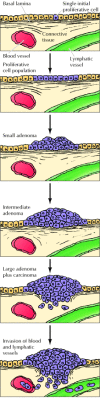
Figure xv.v
Evolution of colon carcinomas. A single initially altered cell gives rise to a proliferative cell population, which progresses first to benign adenomas of increasing size and so to malignant carcinoma. The cancer cells invade the underlying connective (more...)
Causes of Cancer
Substances that cause cancer, called carcinogens, have been identified both past studies in experimental animals and by epidemiological analysis of cancer frequencies in human populations (east.g., the loftier incidence of lung cancer among cigarette smokers). Since the development of malignancy is a complex multistep process, many factors may affect the likelihood that cancer volition develop, and it is overly simplistic to speak of unmarried causes of most cancers. Nonetheless, many agents, including radiation, chemicals, and viruses, have been found to induce cancer in both experimental animals and humans.
Radiation and many chemic carcinogens (Figure 15.6) act past dissentious Dna and inducing mutations. These carcinogens are generally referred to every bit initiating agents, since the induction of mutations in key target genes is thought to be the initial event leading to cancer development. Some of the initiating agents that contribute to human cancers include solar ultraviolet radiations (the major crusade of skin cancer), carcinogenic chemicals in tobacco smoke, and aflatoxin (a potent liver carcinogen produced by some molds that contaminate improperly stored supplies of peanuts and other grains). The carcinogens in tobacco fume (including benzo(a)pyrene, dimethylnitrosamine, and nickel compounds) are the major identified causes of homo cancer. Smoking is the undisputed cause of eighty to 90% of lung cancers, too as being implicated in cancers of the oral crenel, pharynx, larynx, esophagus, and other sites. In total, information technology is estimated that smoking is responsible for about one-third of all cancer deaths—an impressive toll for a single carcinogenic amanuensis.

Figure 15.6
Structure of representative chemic carcinogens.
Other carcinogens contribute to cancer development by stimulating cell proliferation, rather than by inducing mutations. Such compounds are referred to every bit tumor promoters, since the increased cell partition they induce is required for the outgrowth of a proliferative cell population during early stages of tumor evolution. The phorbol esters that stimulate prison cell proliferation by activating protein kinase C (come across Effigy xiii.26) are classic examples. Their activity was divers past studies of chemic induction of skin tumors in mice (Figure fifteen.7). Tumorigenesis in this system can be initiated by a single treatment with a mutagenic carcinogen. Tumors do not develop, even so, unless the mice are subsequently treated with a tumor promoter (usually a phorbol ester) to stimulate proliferation of the mutated cells.
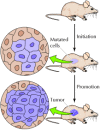
Figure 15.seven
Induction of tumors in mouse skin. Tumors are initiated by mutations induced by a carcinogen. Development of a tumor and so requires treatment with a tumor promoter to stimulate proliferation of the mutated cells.
Hormones, particularly estrogens, are important as tumor promoters in the development of some human cancers. The proliferation of cells of the uterine endometrium, for case, is stimulated by estrogen, and exposure to excess estrogen significantly increases the likelihood that a woman volition develop endometrial cancer. The risk of endometrial cancer is therefore substantially increased by long-term postmenopausal estrogen replacement therapy with high doses of estrogen alone. Fortunately, this risk is minimized by administration of progesterone to counteract the stimulatory effect of estrogen on endometrial cell proliferation. Still, long-term therapy with combinations of estrogen and progesterone may lead to an increased risk of breast cancer.
In improver to chemicals and radiation, some viruses induce cancer both in experimental animals and in humans. The common man cancers caused by viruses include liver cancer and cervical carcinoma, which together business relationship for 10 to 20% of worldwide cancer incidence. These viruses are important not just as causes of human cancer; every bit discussed subsequently in this affiliate, studies of tumor viruses have played a central role in elucidating the molecular events responsible for the development of cancers induced past both viral and nonviral carcinogens.
Properties of Cancer Cells
The uncontrolled growth of cancer cells results from accumulated abnormalities affecting many of the cell regulatory mechanisms that accept been discussed in preceding chapters. This human relationship is reflected in several aspects of cell behavior that distinguish cancer cells from their normal counterparts. Cancer cells typically display abnormalities in the mechanisms that regulate normal cell proliferation, differentiation, and survival. Taken together, these characteristic backdrop of cancer cells provide a description of malignancy at the cellular level.
The uncontrolled proliferation of cancer cells in vivo is mimicked past their behavior in cell culture. A primary distinction between cancer cells and normal cells in culture is that normal cells display density-dependent inhibition of cell proliferation (Effigy 15.8). Normal cells proliferate until they reach a finite cell density, which is determined in role by the availability of growth factors added to the culture medium (normally in the class of serum). They and so finish proliferating and become quiescent, arrested in the Grand0 phase of the prison cell bicycle (see Figure 14.6). The proliferation of most cancer cells, however, is not sensitive to density-dependent inhibition. Rather than responding to the signals that cause normal cells to cease proliferation and enter G0, tumor cells generally continue growing to high cell densities in culture, mimicking their uncontrolled proliferation in vivo.

Figure 15.8
Density-dependent inhibition. Normal cells proliferate in culture until they reach a finite cell density, at which point they become quiescent. Tumor cells, withal, continue to proliferate independent of jail cell density.
A related divergence between normal cells and cancer cells is that many cancer cells have reduced requirements for extracellular growth factors. As discussed in Chapter xiii, the proliferation of most cells is controlled, at least in part, by polypeptide growth factors. For some jail cell types, particularly fibroblasts, the availability of serum growth factors is the principal determinant of their proliferative capacity in civilization. The growth factor requirements of these cells are closely related to the phenomenon of density-dependent inhibition, since the density at which normal fibroblasts become quiescent is proportional to the concentration of serum growth factors in the culture medium.
The growth factor requirements of many tumor cells are reduced compared to their normal counterparts, contributing to the unregulated proliferation of tumor cells both in vitro and in vivo. In some cases, cancer cells produce growth factors that stimulate their own proliferation (Effigy fifteen.9). Such abnormal production of a growth factor by a responsive cell leads to continuous autostimulation of cell partition (autocrine growth stimulation), and the cancer cells are therefore less dependent on growth factors from other, physiologically normal sources. In other cases, the reduced growth factor dependence of cancer cells results from abnormalities in intracellular signaling systems, such as unregulated activeness of growth factor receptors or other proteins (due east.g., Ras proteins or protein kinases) that were discussed in Chapter 13 as elements of betoken transduction pathways leading to cell proliferation.

Figure 15.9
Autocrine growth stimulation. A prison cell produces a growth factor to which it likewise responds, resulting in continuous stimulation of cell proliferation.
Cancer cells are likewise less stringently regulated than normal cells past cell-jail cell and cell-matrix interactions. Most cancer cells are less agglutinative than normal cells, often as a effect of reduced expression of cell surface adhesion molecules. For case, loss of E-cadherin, the principal adhesion molecule of epithelial cells, is important in the development of carcinomas (epithelial cancers). As a result of reduced expression of prison cell adhesion molecules, cancer cells are insufficiently unrestrained past interactions with other cells and tissue components, contributing to the ability of malignant cells to invade and metastasize. The reduced adhesiveness of cancer cells also results in morphological and cytoskeletal alterations: Many tumor cells are rounder than normal, in part because they are less firmly attached to either the extracellular matrix or neighboring cells.
A hit deviation in the jail cell-cell interactions displayed by normal cells and those of cancer cells is illustrated by the phenomenon of contact inhibition (Figure 15.x). Normal fibroblasts migrate across the surface of a culture dish until they make contact with a neighboring jail cell. Further prison cell migration is then inhibited, and normal cells adhere to each other, forming an orderly array of cells on the civilisation dish surface. Tumor cells, in contrast, go along moving later contact with their neighbors, migrating over side by side cells, and growing in disordered, multilayered patterns. Not only the movement merely as well the proliferation of many normal cells is inhibited by cell-jail cell contact, and cancer cells are characteristically insensitive to such contact inhibition of growth.

Effigy fifteen.10
Contact inhibition. Calorie-free micrographs (left) and scanning electron micrographs (correct) of normal fibroblasts and tumor cells. The migration of normal fibroblasts is inhibited by cell contact, and so they form an orderly side-past-side array on the surface of (more...)
Two additional properties of cancer cells bear on their interactions with other tissue components, thereby playing important roles in invasion and metastasis. Beginning, malignant cells generally secrete proteases that digest extracellular matrix components, assuasive the cancer cells to invade adjacent normal tissues. Secretion of collagenase, for case, appears to be an important determinant of the ability of carcinomas to digest and penetrate through basal laminae to invade underlying connective tissue (see Effigy 15.5). 2nd, cancer cells secrete growth factors that promote the formation of new blood vessels (angiogenesis). Angiogenesis is needed to support the growth of a tumor beyond the size of about a million cells, at which point new blood vessels are required to supply oxygen and nutrients to the proliferating tumor cells. Such blood vessels are formed in response to growth factors, secreted by the tumor cells, that stimulate proliferation of endothelial cells in the walls of capillaries in surrounding tissue, resulting in the outgrowth of new capillaries into the tumor. The formation of such new claret vessels is of import non just in supporting tumor growth, but also in metastasis. The actively growing new capillaries formed in response to angiogenic stimulation are hands penetrated by the tumor cells, providing a ready opportunity for cancer cells to enter the circulatory system and begin the metastatic process.
Some other general characteristic of most cancer cells is that they fail to differentiate normally. Such defective differentiation is closely coupled to aberrant proliferation, since, as discussed in Chapter 14, most fully differentiated cells either terminate cell division or dissever only rarely. Rather than conveying out their normal differentiation programme, cancer cells are usually blocked at an early stage of differentiation, consistent with their continued agile proliferation.
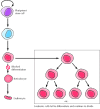
The leukemias provide a particularly good example of the human relationship between lacking differentiation and malignancy. All of the unlike types of blood cells are derived from a common stem cell in the bone marrow (run into Figure 14.44). Descendants of these cells then become committed to specific differentiation pathways. Some cells, for case, differentiate to grade erythrocytes whereas others differentiate to form lymphocytes, granulocytes, or macrophages. Cells of each of these types undergo several rounds of division as they differentiate, but in one case they go fully differentiated, cell partition ceases. Leukemic cells, in contrast, fail to undergo terminal differentiation (Figure 15.11). Instead, they become arrested at early stages of maturation at which they retain their capacity for proliferation and go on to reproduce.
Effigy 15.11
Lacking differentiation and leukemia. Different types of blood cells develop from a multipotential (pluripotent) stem jail cell in the os marrow. The precursors of differentiated cells undergo several rounds of cell division as they mature, but cell division (more...)
As discussed in Chapter thirteen, programmed jail cell decease, or apoptosis, is an integral part of the differentiation programme of many cell types, including blood cells. Many cancer cells fail to undergo apoptosis, and therefore showroom increased life spans compared to their normal counterparts. This failure of cancer cells to undergo programmed jail cell death contributes substantially to tumor evolution. For example, the survival of many normal cells is dependent on signals from growth factors or from the extracellular matrix that prevent apoptosis. In contrast, tumor cells are often able to survive in the absenteeism of growth factors required by their normal counterparts. Such a failure of tumor cells to undergo apoptosis when deprived of normal environmental signals may exist important not only in primary tumor development merely likewise in the survival and growth of metastatic cells in abnormal tissue sites. Normal cells also undergo apoptosis following Deoxyribonucleic acid harm, while many cancer cells fail to do and then. In this case, the failure to undergo apoptosis contributes to the resistance of cancer cells to irradiation and many chemotherapeutic drugs, which deed by damaging Deoxyribonucleic acid. Abnormal jail cell survival, as well every bit cell proliferation, thus plays a major role in the unrelenting growth of cancer cells in an beast.
Transformation of Cells in Culture
The study of tumor consecration by radiation, chemicals, or viruses requires experimental systems in which the furnishings of a carcinogenic amanuensis can be reproducibly observed and quantitated. Although the activity of carcinogens can be assayed in intact animals, such experiments are difficult to quantitate and control. The development of in vitro assays to detect the conversion of normal cells to tumor cells in civilisation, a process called cell transformation, therefore represented a major advance in cancer research. Such assays are designed to detect transformed cells, which display the in vitro growth properties of tumor cells, post-obit exposure of a civilization of normal cells to a carcinogenic agent. Their application has immune experimental analysis of cell transformation to accomplish a level of sophistication that could not have been attained by studies in whole animals alone.
The starting time and most widely used assay of cell transformation is the focus analysis, which was developed by Howard Temin and Harry Rubin in 1958. The focus analysis is based on the ability to recognize a grouping of transformed cells equally a morphologically distinct "focus" confronting a groundwork of normal cells on the surface of a culture dish (Effigy 15.12). The focus analysis takes advantage of three properties of transformed cells: altered morphology, loss of contact inhibition, and loss of density-dependent inhibition of growth. The result is the formation of a colony of morphologically altered transformed cells that overgrow the background of normal cells in the civilisation. Such foci of transformed cells can usually be detected and quantified within a week or two later exposure to a carcinogenic agent. In general, cells transformed in vitro are able to form tumors following inoculation into susceptible animals, supporting in vitro transformation as a valid indicator of the formation of cancer cells.

Effigy fifteen.12
The focus assay. A focus of chicken embryo fibroblasts induced by Rous sarcoma virus. (From H. One thousand. Temin and H. Rubin, 1958. Virology 6: 669.)
Source: https://www.ncbi.nlm.nih.gov/books/NBK9963/
0 Response to "What is uncontrolled cell growth and what does it lead to?"
Post a Comment